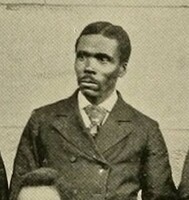
Cemetery associated with the Christian Aid Society. Land acquired from J. Lee Sloan. Originally a burial plot for Davidson's black community free of charge for members of the Christian Aid Society. The cemetery is now open to anyone pending approval of the Society's board.
The oldest black congregation in Davidson. The congregation itself was formed in the 1870s, and the physical building was erected in 1894. The Davidson College Board of Trustees donated the land for the church.
Built in 1849. Served as a home for the college presidents until 1887, after which it was used as a faculty home or student housing. The building was demolished in 1934.
Included in the history of the sciences at Davidson College is the founding of the North Carolina Medical College. Incorporated in 1893, the North Carolina Medical College was the first chartered medical college in North Carolina and had its roots in Davidson’s pre-medical program. The “president” of the college was Dr. John Peter Munroe, a Davidson College physician and professor. In 1896, Dr. Munroe bought a lot from Davidson College and built on it a three-story brick building for his college.
Oak and Elm rows were two of the original eight buildings erected on the Davidson College campus. The building of the campus began in 1836 with only 250,000 bricks and in 1837 the first students became the inhabitants of the rows.
Part of Davidson's original campus, dedicated in 1836 and built in 1837. Used for religious services conducted by both the college and the town until the town received their own building in the 1880s. Converted into Shearer Hall in 1901.
A late 19th century-early 20th century African American community consisting of six small three-room houses along a narrow road. Named for former professor turned Davidson College president John Bunyan Shearer, who built and rented out the residences there.
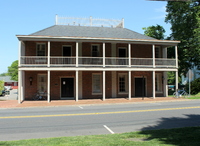
First constructed as a store in 1848. Purchased in 1855 by
Hanson Pinkney Helper and remodeled into a thirteen-room hotel. Purchased around 1901 by the Sloan family and operated as a boarding house and weekend rooming house for visiting college girls. Purchased by the college in 1946. Used in the 1950s and 1960s as a Teen Canteen. Renovated in 1971. Designated as a Charlotte Mecklenburg Historic Site in 1977.